
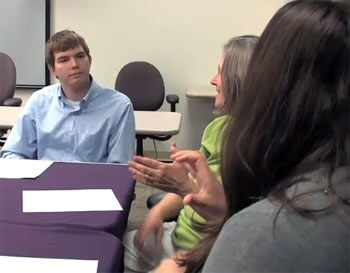
Qualified interpreters help ensure that a person with combined hearing and vision receives important information and is able to communicate with others.
Unlike an SSP, an interpreter focuses exclusively on transmitting information that a person who is deafblind wants to communicate or needs to receive. A skilled interpreter can be invaluable, especially one who is trained in a variety of communications methods, such as ASL and tactile signing.
Many people who are deafblind communicate in American Sign Language, or ASL. While family members and friends who know ASL often translate for someone with combined hearing and vision loss in social situations, it’s best to use professional ASL interpreters in educational, medical, legal and business settings. Here are a few situations where a person who is deafblind may find it helpful to request the presence of a trained interpreter to facilitate communication:
- During medical appointments, including emergency room visits.
- At work, including during job interviews, meetings, training and interacting with team members.
- At school, in the classroom as well as to exchange information with a child’s teacher or caregiver.
- During a consultation with a county social worker.
- Meetings with lawyers, bank staff or other professionals.
- Community functions and special occasions.