
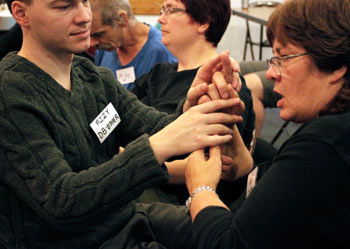
Many ASL interpreters are trained to communicate through tactile signing. If you require the services of a tactile signer, be sure to ask the ASL Interpreter about the interpreter’s experience in tactile signing.
A sign language interpreter is more than someone who knows some ASL signs. ASL interpreters must complete an extensive training program and must be certified by the National Council on Interpreting. Certified ASL interpreters follow a code of conduct that requires them to remain objective and keep any information discussed confidential.
There are many interpreter referral agencies in Minnesota. When hiring an interpreter, be sure to find out:
- If the interpreter is certified.
- If the interpreter has worked with people who are deafblind.
- If the interpreter is experienced in tactile signing.
- If the person follows the RID Professional Code of Conduct.
- About rates and fees.
You should be prepared to provide:
- The name, address and telephone number of a contact person.
- The date, time and place where the interpreter will be needed.
- Approximately how long the session will last.
- The names of participants who are deaf or hard of hearing.
- The type of situation and the type of interpreter needed – this will help to ensure that the interpreter has the right skills. For example, if you are requesting an interpreter for a medical appointment, a medical interpreter is required.
- Payment information.
You will learn where to find interpreters in Module 5.
Click here to download a comparison of the roles of an SSP, intervener and interpreter.
Click here to download tips for hiring an ASL Interpreter.
Click here to download an overview of different types of Sign Language interpreters.
Click here to download an overview of the Interpreters' Code of Professional Conduct.